Tubular OPzV vs Flat Plate GEL Batteries: Long-term Cost-Benefit Analysis
Answer: For stationary solar storage with daily cycling, tubular OPzV (gel, tubular positive plate) batteries offer a lower total cost of ownership over 8–12 years despite a 30–50% higher initial purchase price compared to flat plate GEL batteries. Flat plate GEL units are cost-effective for backup or low-cycle applications (50–100 cycles/year) where upfront capital matters more than cycle life. When sourcing from a China battery manufacturer, verify the actual plate casting process, alloy composition, and export documentation—UN2800 versus UN2794—because these factors determine both performance and regulatory compliance. Request cycle test data at 80% DoD, not just C10 capacity ratings.
Understanding the Core Technology Differences
Tubular OPzV Construction and Electrochemistry
Tubular OPzV (Ortsfest PanZerplatte, Ventilreguliert) batteries use positive plates constructed from a spine grid surrounded by a woven tube fabric packed with active material (lead dioxide). The tubular design physically retains the active mass, preventing shedding during deep discharges. The electrolyte is immobilized as a gel (fumed silica mixed with sulfuric acid), and the valve-regulated design allows oxygen recombination, minimizing water loss.
Key characteristics:
- Positive grid: Lead-calcium or lead-tin alloy spines, cast in book molds
- Cycle life: 1,500–3,000 cycles at 80% DoD (manufacturer-dependent)
- Depth of discharge tolerance: 80% routinely, occasional 100% DoD acceptable
- Charge efficiency: 92–95% in typical solar profiles
- Operating temperature: -20°C to +55°C (derated above 25°C)
Flat Plate GEL Construction
Flat plate GEL batteries use conventional flat grids pasted with active material, similar to AGM or flooded designs, but with a gelled electrolyte. The positive plate is a flat lead-alloy grid with paste applied to both sides. This design is simpler and cheaper to manufacture but has inherent limitations.
Key characteristics:
- Positive grid: Lead-calcium or lead-antimony alloys, typically continuous cast or expanded metal
- Cycle life: 500–1,200 cycles at 80% DoD (manufacturer-dependent)
- Depth of discharge tolerance: 50–60% recommended for longevity
- Charge efficiency: 88–92%
- Operating temperature: -20°C to +50°C
Why Tubular Design Wins for Deep Cycling
The tubular positive plate's active material is confined within porous tubes, preventing the expansion and shedding that degrades flat plates under deep discharge. In flat plate designs, the paste expands and contracts with each cycle, gradually losing contact with the grid. This is why tubular OPzV batteries maintain higher capacity retention after 1,000 cycles—typically 80–85% versus 60–70% for flat plate GEL.
Long-Term Cost-Benefit Analysis Framework
Total Cost of Ownership (TCO) Calculation
For B2B buyers, the relevant metric is not price per kWh but cost per kWh delivered over the battery's service life. The formula:
TCO = (Initial Purchase Price + Installation + Maintenance + Replacement Costs) ÷ (Total kWh Delivered Over Life)
Consider a 48V 1000Ah system (48 kWh nominal) for a telecom site or small commercial solar installation:
| Parameter | Tubular OPzV | Flat Plate GEL |
|---|---|---|
| Initial price (example) | $4,200–$5,500 | $2,800–$3,800 |
| Cycle life at 80% DoD | 2,000–3,000 | 600–1,200 |
| Usable energy per cycle (kWh) | 38.4 | 38.4 |
| Total energy delivered (kWh) | 76,800–115,200 | 23,040–46,080 |
| Cost per kWh delivered | $0.036–$0.072 | $0.061–$0.165 |
| Expected service life (years) | 10–15 | 4–8 |
| Replacement cycles needed (10 yrs) | 0–1 | 1–2 |
Note: Prices are illustrative ranges for comparison. Confirm current market rates with your supplier.
Application-Specific Cost Analysis
Daily cycling (solar off-grid, telecom, rural electrification): Tubular OPzV wins decisively. At 300 cycles/year, a flat plate GEL battery reaches end-of-life in 2–4 years, requiring replacement. The OPzV unit lasts 7–10 years. Even with a 50% higher initial cost, the OPzV's cost per cycle is 40–60% lower.
Backup power (grid-tied, UPS, emergency lighting): Flat plate GEL may be acceptable if the battery experiences fewer than 50–100 deep cycles annually. The lower upfront cost reduces capital expenditure, and the shorter cycle life is not a limiting factor. However, if backup events are unpredictable and could exceed 50% DoD, OPzV provides a safety margin.
Seasonal storage (solar with winter loads): The decision depends on cycle frequency. If the battery cycles daily in summer but only weekly in winter, calculate the weighted average. A hybrid approach—using OPzV for the primary bank and flat plate for auxiliary loads—can optimize capital allocation.
Hidden Costs: Temperature, Charging, and Maintenance
- Temperature derating: Both chemistries lose 50% of life for every 8–10°C above 25°C. In unventilated enclosures, flat plate GEL batteries often run hotter due to higher internal resistance during charge.
- Charge control: OPzV batteries tolerate higher charge voltages (2.35–2.40 V/cell) and accept current more readily, reducing generator runtime in hybrid systems. Flat plate GEL requires stricter voltage limits (2.30–2.35 V/cell) to prevent gassing.
- Maintenance: Both are valve-regulated and nominally maintenance-free, but OPzV batteries typically have lower self-discharge (2–3% per month vs 3–5% for flat plate), reducing the need for equalization charges in seasonal storage.
Sourcing from a Chinese OEM Factory: Manufacturing and Logistics Considerations
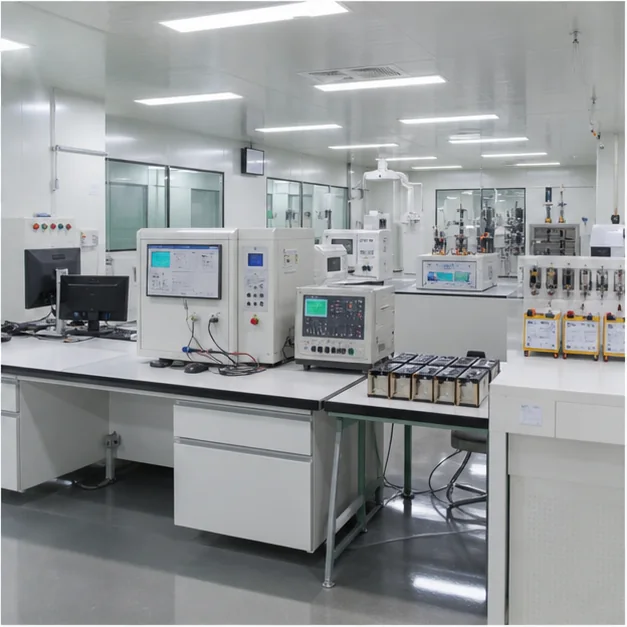
Buyers should audit the Chinese factory's manufacturing route from lead-alloy control and plate casting through curing, assembly, formation, capacity testing and final inspection. Plate casting parameters, grid alloy records and lot traceability should be included in the supplier quality plan. For export logistics, confirm the battery design and current carrier requirements before assigning UN2800 for qualifying non-spillable batteries or UN2794 for wet batteries; sea freight documentation, packaging and test evidence must match the actual product.
Plate Casting and Alloy Control
When evaluating a China solar gel battery manufacturer, the positive plate casting method is the single most important quality indicator.
Book mold casting (tubular OPzV): The spine grid is cast in a two-part mold, producing a dense, fine-grained structure. High-quality Chinese factories use lead-tin alloys (1.5–2.5% tin) with calcium (0.05–0.08%) for corrosion resistance. The mold temperature, pouring rate, and cooling profile must be tightly controlled—ask your supplier for their alloy composition certificate and casting temperature logs.
Continuous grid casting (flat plate): This high-speed process produces consistent grids but can introduce micro-cracks if the lead alloy is not properly conditioned. Reputable Chinese OEM factories use continuous casting lines with in-line thickness gauges and X-ray inspection. For flat plate GEL, the paste density (typically 3.8–4.2 g/cm³) and curing humidity are critical—request the factory's paste formulation and curing chamber parameters.
Production QC and Testing Protocols
A credible Chinese OEM factory should demonstrate:
- Incoming material testing: Lead purity (99.985% minimum), alloy composition verification via spectrometer
- In-process controls: Grid weight checks, paste density sampling, plate curing temperature/humidity logs
- Formation and conditioning: Initial charge cycles with capacity verification at C10 rate
- Final testing: Every battery should undergo voltage, internal resistance, and leak testing. Sample batteries should be subjected to cycle life testing (at least 500 cycles) and thermal runaway testing
Ask for the factory's QC checklist and recent test reports. Do not accept verbal assurances—request PDF copies of batch test certificates.
Export Logistics: UN2800 vs UN2794
This is a critical distinction that many importers get wrong. The applicable UN number depends on the battery's construction and test results, not on the chemistry alone.
UN2800 (Batteries, wet, non-spillable, electric storage): Applies to sealed lead-acid batteries that pass the vibration and pressure differential tests specified in Special Provision 238 of the UN Model Regulations. Most OPzV and flat plate GEL batteries from reputable Chinese factories qualify for UN2800 because they are sealed and non-spillable. This classification allows transport as non-dangerous goods under most modal regulations, subject to specific packaging requirements.
UN2794 (Batteries, wet, filled with acid, electric storage): Applies to vented (flooded) lead-acid batteries that can spill electrolyte. This classification requires full dangerous goods documentation, including a dangerous goods declaration, UN specification packaging, and placarding on vehicles.
Critical caveat: Not all GEL batteries automatically qualify for UN2800. The battery must pass the vibration test (30 minutes at 1.2mm amplitude, 16.7 Hz) and the pressure differential test (95 kPa for 6 hours) without leakage. Some low-cost Chinese factories may not perform these tests or may not have the documentation to prove compliance.
Sea freight documentation: For UN2800 batteries, you typically need:
- Material Safety Data Sheet (MSDS) specific to the battery
- Certificate of Non-Spillable Battery (if required by the carrier)
- Manufacturer's declaration confirming UN2800 classification
- For UN2794, additionally: Dangerous Goods Declaration, UN packaging certificate, and emergency response information
Verification steps for importers:
- Request the factory's UN test report from an accredited laboratory (e.g., SGS, TÜV, or a CNAS-accredited lab in China)
- Confirm the report covers the exact model you are importing
- Check with your freight forwarder whether the carrier accepts UN2800 as non-dangerous goods or requires additional documentation
- Verify that the battery's packaging (outer carton, palletization) meets the carrier's requirements
When comparing quotes from different Chinese suppliers, ask each factory to provide their UN classification and test report. If a supplier cannot produce this documentation, consider it a red flag regardless of price.
RFQ Data and Sourcing Decisions
When issuing an RFQ to Chinese factories, include:
- Cycle life requirement: Specify cycles at 80% DoD and the end-of-life criterion (typically 80% of rated capacity)
- Operating environment: Temperature range, altitude, and expected charge/discharge profile
- UN classification requirement: State that you require UN2800 documentation
- Testing requirements: Specify whether you require third-party testing (e.g., SGS inspection before shipment)
- Warranty terms: Ask for the warranty period and the conditions that void it (e.g., overcharge, deep discharge beyond specified limits)
Request samples for independent testing before committing to a container order. A reputable Chinese OEM factory will typically provide samples at cost, with the cost credited against the first production order.
Performance Comparison: Real-World Data and Specifications
Capacity and Discharge Characteristics
| Specification | Tubular OPzV | Flat Plate GEL |
|---|---|---|
| Nominal capacity range | 200–3000 Ah (C10) | 20–250 Ah (C10) |
| Capacity at C100 (vs C10) | 110–120% | 105–115% |
| Max discharge current | 0.25–0.5 C10 | 0.5–1.0 C10 |
| Internal resistance (per 100 Ah) | 0.8–1.5 mΩ | 0.5–1.0 mΩ |
| Self-discharge (per month at 20°C) | 2–3% | 3–5% |
| Charge voltage (float) | 2.23–2.27 V/cell | 2.25–2.30 V/cell |
| Charge voltage (boost) | 2.35–2.40 V/cell | 2.30–2.35 V/cell |
| Max charge current | 0.25 C10 | 0.20 C10 |
| Operating temperature range | -20°C to +55°C | -20°C to +50°C |
Values are typical ranges from Chinese manufacturers. Confirm specific data with your supplier for the exact model under consideration.
Cycle Life at Different Depths of Discharge
The cycle life advantage of tubular OPzV becomes more pronounced at deeper discharge levels:
- At 50% DoD: OPzV: 3,500–5,000 cycles; Flat plate GEL: 1,200–2,000 cycles
- At 80% DoD: OPzV: 1,500–3,000 cycles; Flat plate GEL: 500–1,200 cycles
- At 100% DoD: OPzV: 800–1,500 cycles; Flat plate GEL: 200–400 cycles
For solar applications where the battery may be deeply discharged during cloudy periods, this difference is decisive.
Temperature Effects
Both chemistries lose capacity at low temperatures and life at high temperatures. However, tubular OPzV batteries typically show better low-temperature performance because the tubular structure maintains better electrolyte contact with the active material. At -10°C, an OPzV battery may deliver 70–80% of rated capacity versus 60–70% for flat plate GEL.
Practical Procurement Recommendations
When to Choose Tubular OPzV
- Solar off-grid systems with daily cycling
- Telecom towers in remote locations where replacement logistics are costly
- Microgrids and rural electrification projects with 10+ year project horizons
- Applications where grid reliability is low and deep discharges are common
When to Choose Flat Plate GEL
- Backup power with infrequent cycling (<50 cycles/year)
- Projects with tight upfront budgets and shorter payback requirements
- Applications with space constraints where the smaller footprint of flat plate batteries is advantageous
- Hybrid systems where the battery is primarily a buffer, not the primary energy source
Sourcing Strategy
When working with a Chinese OEM factory, consider a dual-sourcing strategy: use flat plate GEL for backup applications and tubular OPzV for cycling applications. This allows you to negotiate volume pricing across both product lines while maintaining a single supplier relationship. However, ensure the factory has separate production lines for each technology—cross-contamination of paste or alloy materials can compromise quality.
For large projects (container volumes), request a factory audit. Verify that the Chinese supplier has the production capacity, testing equipment, and export experience to meet your delivery schedule. Ask for references from other importers in your region.